
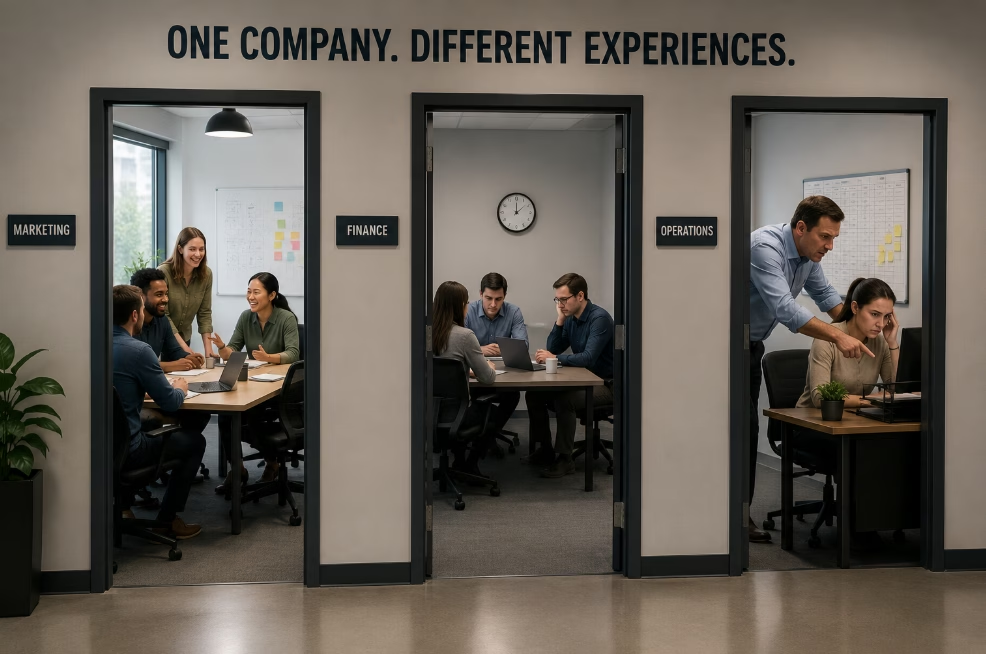
Company culture is shaped less by what’s written in the handbook and more by what team members experience every day.
Leadership sets the tone, but managers bring that tone to life through communication, accountability, expectations, and decision-making.
The problem is that many organizations unknowingly create multiple workplace cultures under one roof.
One manager gives direct feedback and holds everyone accountable. Another avoids difficult conversations entirely. One team has flexibility and open communication, while another operates with rigid oversight and constant second-guessing. Team members begin comparing experiences, and that disparity creates frustration quickly.
The issue usually isn’t one “bad manager.” It’s the absence of alignment.
Different Managers, Different Rules
Team members notice inconsistency faster than leadership realizes.
They see who gets flexibility, who receives recognition, who’s allowed to miss deadlines, and who faces consequences for the same behavior.
Once those differences become visible, trust issues emerge.
A company may say collaboration is important, but if one manager encourages ideas while another shuts down discussion, the culture message loses credibility. Leadership may talk about accountability, but if expectations vary wildly between departments, team members stop taking those values seriously.
This creates confusion about what success even looks like inside the organization.
Culture Problems Rarely Start at the Top
Many leadership teams believe culture issues come from disengaged team members, hiring mistakes, or communication gaps between departments.
Sometimes those things contribute, but inconsistent management behavior is frequently sitting underneath the problem.
Managers are interpreting company values in completely different ways.
Without guidance, some managers default to micromanaging, and others become overly hands-off. Some prioritize relationships while others focus only on output
None of these approaches exist in isolation because team members talk to each other constantly.
What leadership views as “management style differences” often feels like unfairness to the people experiencing them.
Inconsistency Creates Operational Problems Too
This doesn’t stay contained to morale or engagement.
Inconsistent management styles create operational headaches that impact retention, productivity, and hiring. Team members become hesitant to collaborate across departments because expectations feel unpredictable. High performers grow frustrated watching uneven accountability. New hires struggle to understand what behavior is rewarded.
Eventually, managers themselves become frustrated because they’re operating without a shared leadership framework.
That’s where organizations begin seeing burnout, communication breakdowns, and unnecessary turnover.
Strong Cultures Require Management Alignment
Healthy company cultures don’t require every manager to lead identically.
Different personalities and communication styles can absolutely coexist.
What organizations do need is consistency around expectations, accountability, feedback, communication standards, and leadership behavior.
That alignment creates stability for team members while still allowing managers to lead authentically.
About Focus HR, Inc.
Focus HR, Inc. uncomplicates the people side of business by providing small business owners with outsourced HR, project HR, and Leadership Coaching. For more information, please contact us today! If you liked this post, please subscribe to our blog. You can opt-out at any time.
To learn more about FocusHR and for updates, please like our Facebook page and follow us on LinkedIn.